
HVAC is one of the highest-stakes vendor relationships in facility management. When a cleaning contractor underperforms, you get complaints. When an HVAC contractor underperforms, you get system failures, tenant escalations, regulatory issues, and repair bills that were entirely preventable.
Yet HVAC contractor performance is often the least systematically tracked of any facility service. Many facility managers rely on reactive maintenance records and gut feel to evaluate whether their HVAC vendor is doing the job.
This guide lays out a practical approach to tracking and managing HVAC contractor performance, from the KPIs that matter to the inspection process to what to do when your contractor is falling short.
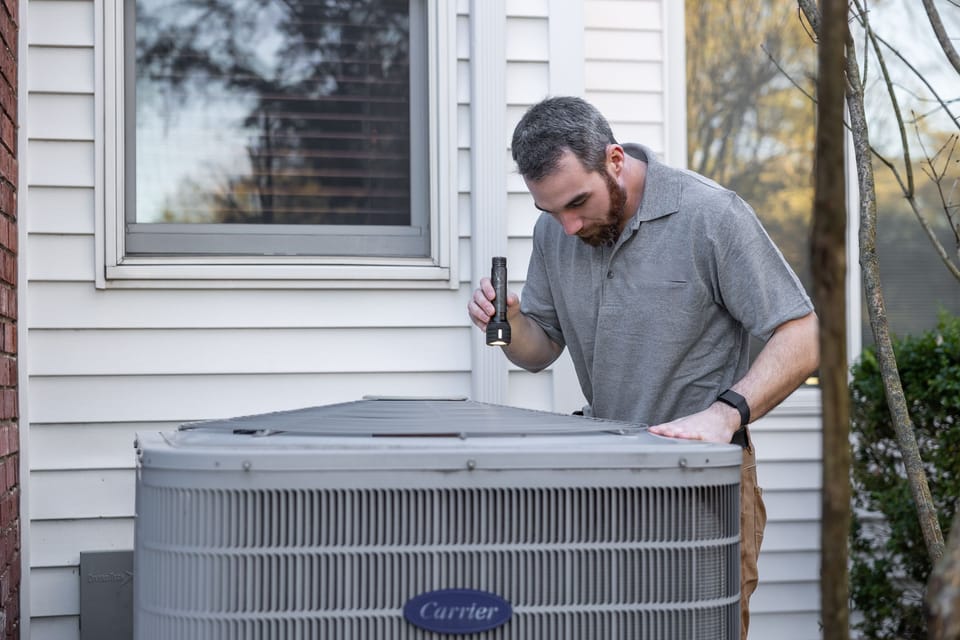
Why HVAC contractors are high-stakes vendors
HVAC systems are responsible for indoor air quality, temperature control, and humidity regulation across your facility. They are also connected to fire suppression systems, building automation platforms, and energy management in ways that make failures cascade.
The financial exposure is significant. Emergency HVAC repairs cost two to three times more than planned maintenance. Unplanned system downtime in commercial facilities can trigger lease break clauses, tenant credits, and regulatory fines depending on your jurisdiction and occupancy type.
Beyond cost, HVAC performance directly affects occupant health and comfort. Poor air quality from neglected filtration or cooling tower maintenance is not just an inconvenience. In healthcare, education, and food service settings it is a compliance and safety issue.
All of this means that HVAC contractor performance is not just a facilities operations question. It is a risk management question.
Preventive vs. reactive: the performance baseline that matters most
Before tracking individual KPIs, the most important question to answer about your HVAC contractor is whether they are primarily preventive or primarily reactive.
A preventive contractor shows up on schedule, completes documented maintenance tasks, flags issues before they become failures, and provides reports that allow you to plan ahead. Breakdowns still happen, but they are exceptions.
A reactive contractor responds when called, fixes what is broken, and moves on. Over time, deferred maintenance accumulates, equipment lifespan shortens, and repair costs climb. The contractor may be responsive and technically competent, but the relationship structure is costing you money.
Tracking performance starts with measuring which mode your contractor actually operates in, regardless of what the contract says.
6 KPIs to track HVAC contractor performance
These are the metrics that give you a clear, objective picture of how your HVAC contractor is performing. For a broader view of vendor metrics across all service types, see our guide on facility manager vendor KPIs.
1. Preventive maintenance completion rate
What percentage of scheduled PM visits were completed on time and in full? A contractor scoring below 90% on PM completion is running behind, which means deferred maintenance is building up somewhere in your system.
2. Mean time to respond
How quickly does the contractor respond to emergency and urgent service calls? Define response time as the time from your request to a technician on-site. Your SLA should specify response windows by priority level, and your contractor's response time should stay within them.
3. Callback rate
How often does the same issue recur within 30 to 60 days of a repair? A high callback rate means repairs are not resolving root causes. It may indicate inadequate diagnosis, parts substitution, or technician skill gaps.
4. Filter and component replacement compliance
Are filters, belts, coils, and other serviceable components being replaced on schedule? This is one of the easiest items to defer and one of the hardest to detect if you are not checking. Regular filter changes alone account for a significant portion of HVAC efficiency and air quality outcomes.
5. Documentation submission rate
Are service reports submitted on time with the required detail? A contractor who completes maintenance but does not document it leaves you with no record for warranty claims, regulatory inspections, or future troubleshooting. Treat documentation as part of the job, not optional.
6. Emergency call frequency
How many unplanned emergency calls did you place in a given period, compared to the prior period and compared to your PM schedule? Rising emergency call frequency is often a leading indicator of PM under-delivery. If emergency calls are increasing while PM visits are being completed, your PM scope may need to be expanded.
How to run an HVAC maintenance inspection
Do not rely solely on the contractor's own service reports to evaluate their work. Periodic independent inspections are a critical check, especially for high-value equipment. Our vendor site audit guide covers a broader inspection framework you can adapt for HVAC.
An effective HVAC inspection covers:
- Filter condition: Are filters installed correctly and within replacement schedule?
- Coil cleanliness: Are evaporator and condenser coils free from buildup that reduces efficiency?
- Refrigerant levels: Are levels within spec, and is there any evidence of leaks?
- Belt tension and wear: Are belts properly tensioned and showing appropriate wear patterns?
- Drain pan condition: Is the condensate drain clear and the pan clean?
- Control calibration: Are thermostats and sensors calibrated correctly?
- Documentation review: Do the contractor's service records match the equipment's actual condition?
The last point is important. Discrepancies between service records and actual equipment condition are a red flag that work is being logged but not completed.
Red flags to watch for
Beyond metrics, there are behavioral patterns that indicate a vendor relationship is deteriorating.
Technician turnover: If your site is consistently served by different technicians each visit, institutional knowledge about your systems is not building up at the contractor. This increases diagnostic time, error risk, and callback rates.
Deferred recommendations: A contractor who repeatedly identifies the same issue as a recommendation without escalating or pricing the repair may be managing your expectations rather than your equipment.
Vague service reports: Reports that say "unit checked and serviced" without itemizing what was done are difficult to audit and suggest either rushed work or poor record-keeping.
Scope creep on emergency calls: Emergency calls that consistently result in upsell recommendations, especially after PM visits where the issue was not flagged, deserve scrutiny.
How to escalate and document HVAC performance issues
When you identify a performance problem, document it before raising it with your contractor. This means logging the specific issue, the date, the equipment affected, and the impact on your facility.
A structured escalation process:
- Log the issue in your vendor tracking system with supporting documentation (photos, service records, tenant complaints)
- Raise it at your next scheduled review, or immediately if it is operationally urgent
- Request a root cause analysis from the contractor for recurring issues
- Set a remediation timeline with specific measurable outcomes
- Follow up at the agreed date and document whether the issue was resolved
If the issue is not resolved after one remediation cycle, that should trigger a formal performance notice and a contract review conversation. For guidance on navigating these conversations without damaging the relationship, see our guide on handling vendor performance issues.
Managing HVAC contractors across multiple sites
For multi-site facility managers, HVAC contractor performance becomes harder to track because each site may have different equipment, different local contractors, and different baseline performance levels.
The common failure mode is that performance tracking stays informal and site-specific. A problem at one location does not inform decisions at another, and you lose the ability to identify contractor-level patterns versus site-level anomalies. This is also where operations leaders benefit from a portfolio-level roll-up of the same HVAC data facility managers are already logging site by site.
A consistent performance framework, including a structured vendor rating system, allows you to:
- Compare contractor performance fairly, even across different equipment profiles
- Identify whether a performance issue is site-specific or systemic
- Negotiate more effectively with contractors when you have data across multiple relationships
- Make informed decisions about standardizing on a single regional contractor versus maintaining multiple local relationships
How Evalystar Helps You Track HVAC Contractor Performance
Evalystar is built for facility managers who need to track vendor performance across multiple sites and service categories without building a custom system from scratch.
For HVAC contractor management specifically, Evalystar lets you:
- Log PM completion rates, response times, and callback rates in a structured format
- Track service documentation submissions and flag overdue reports
- Compare HVAC contractor performance across sites on a single dashboard
- Set performance thresholds and receive alerts when a contractor drops below them
- Generate performance summaries ahead of contract renewal conversations
If you are currently managing HVAC contractor performance through a combination of email, service reports, and memory, Evalystar gives you the visibility to catch issues earlier and act with confidence.
Conclusion
HVAC contractor performance is too consequential to manage informally. The combination of high failure costs, occupant impact, and regulatory exposure means that gaps in contractor performance have real consequences.
Start with six KPIs, build a basic inspection cadence, and track documentation alongside work completion. That alone puts you ahead of most facility teams and gives you the foundation to have productive, evidence-based conversations with your contractors.
Evalystar helps facility managers track HVAC and all other contractor performance in one place. See how it works.